
Last updated November 15, 2026
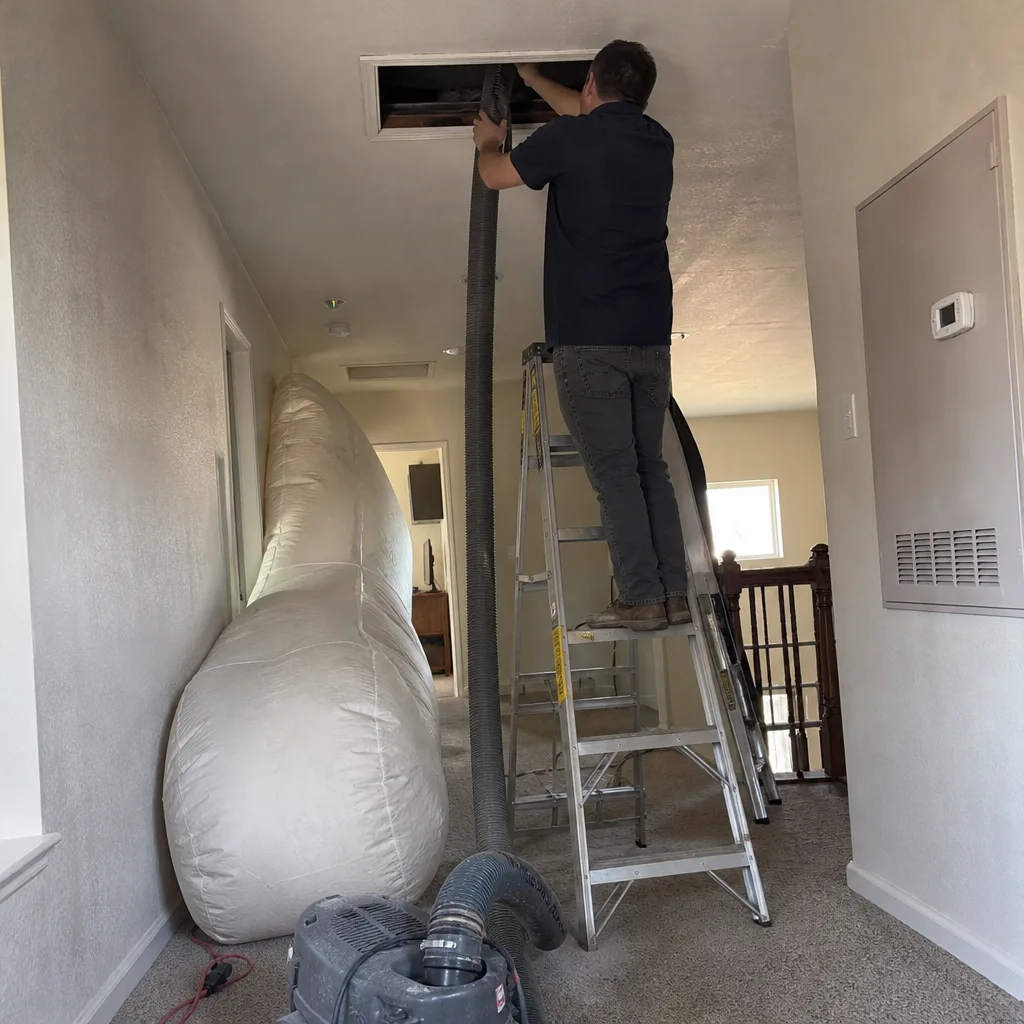
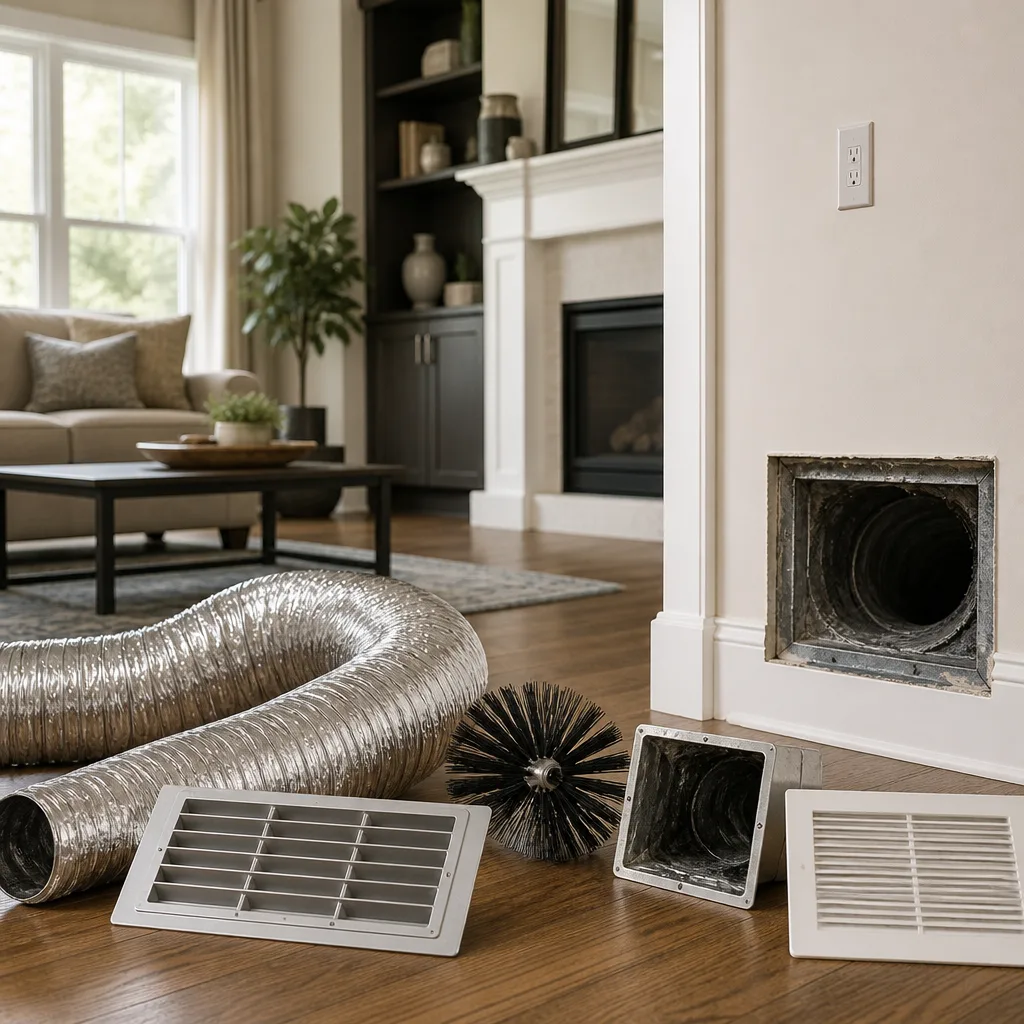 Whole-home duct cleaning
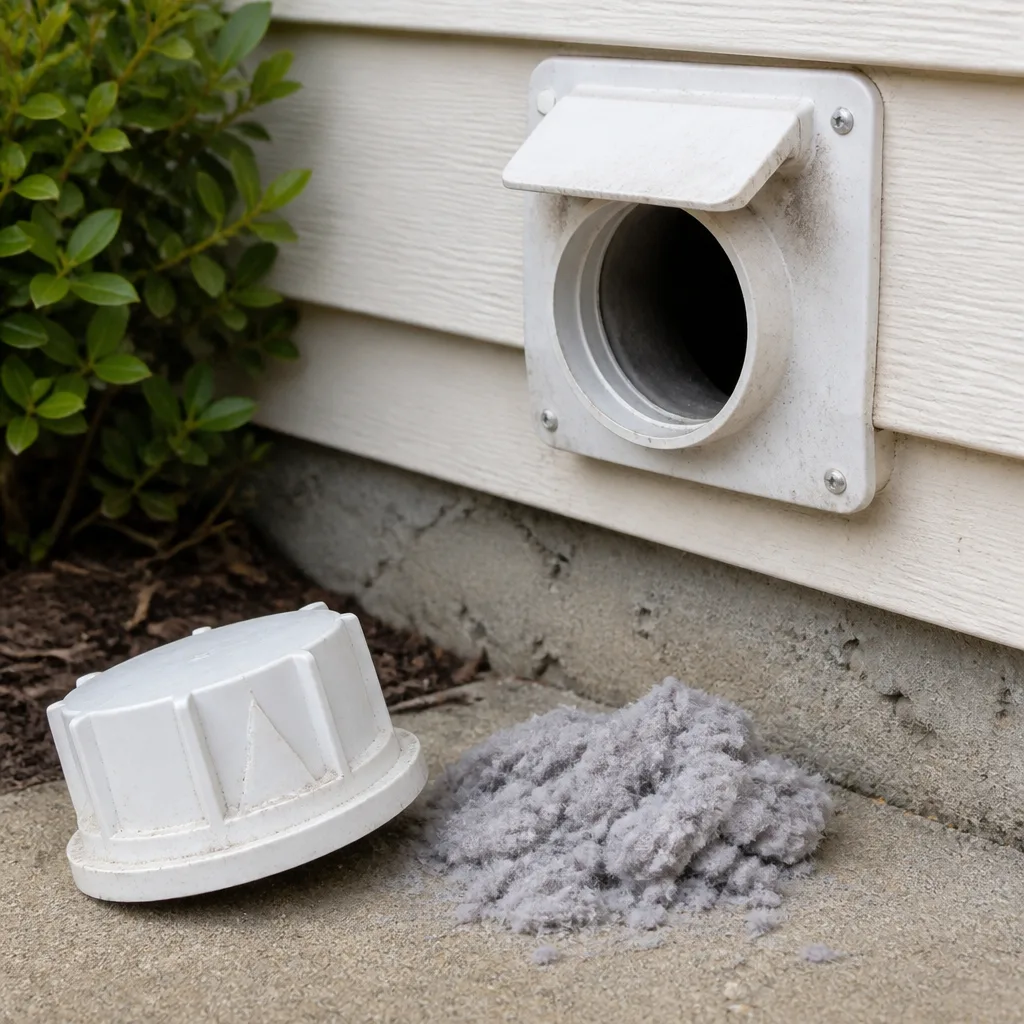 Dryer vent cleaning
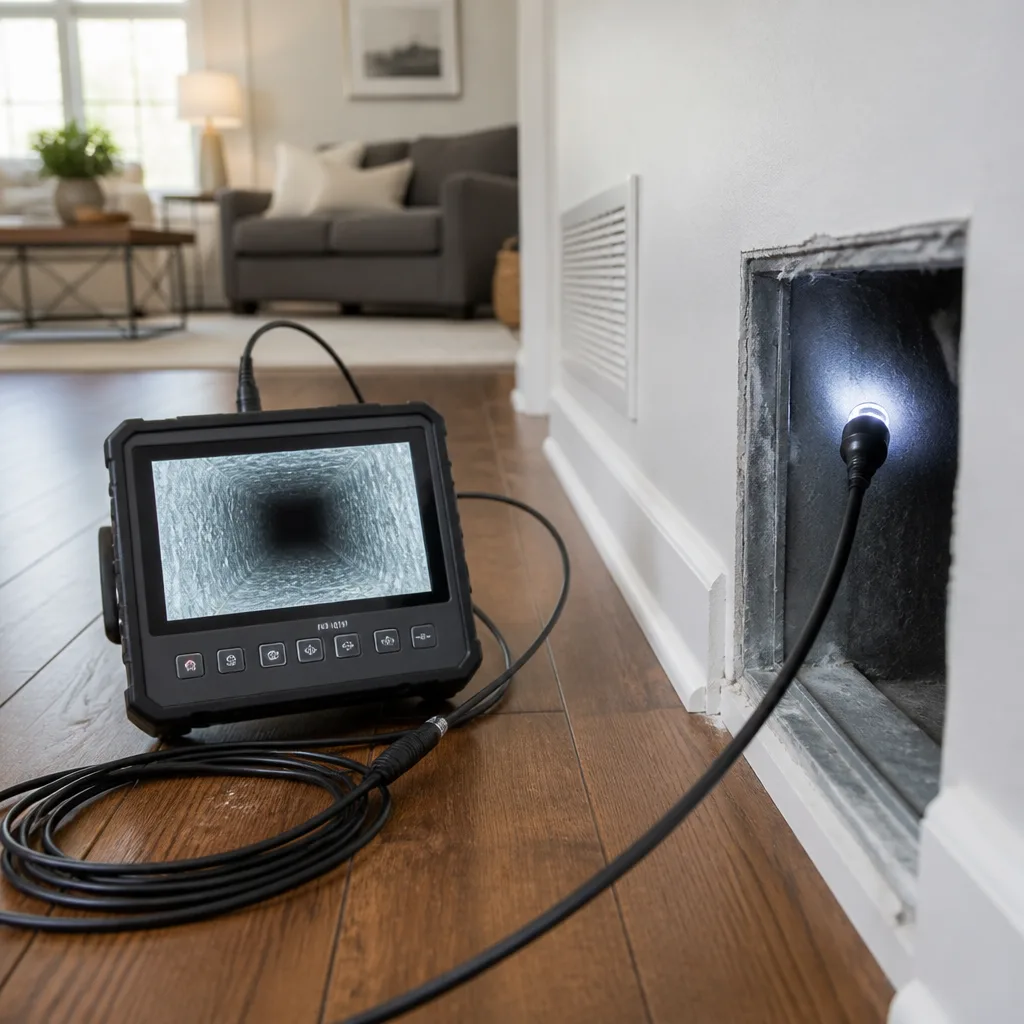 Camera inspection
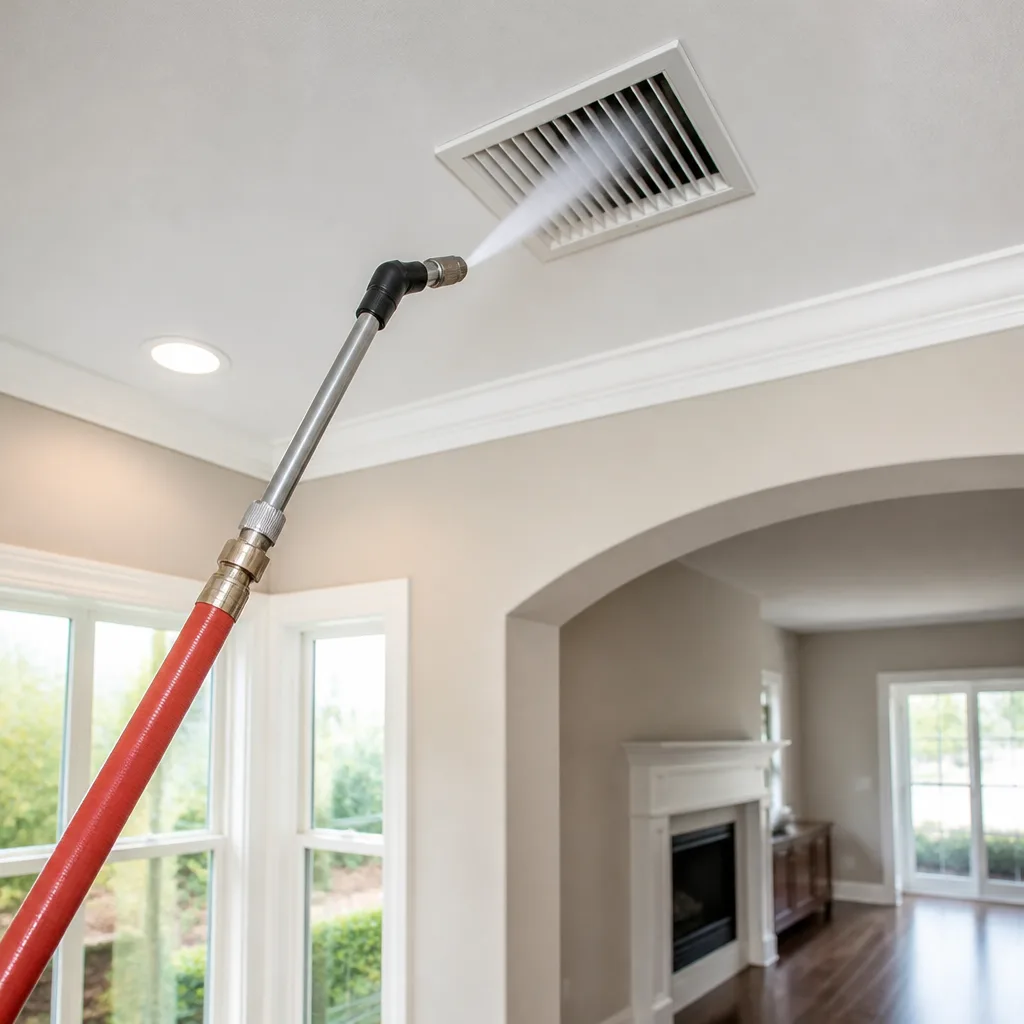 Sanitizing & deodorizing
Whole-system duct and dryer vent check with before-and-after photos - you see exactly what came out of your vents
That "$99 whole-house special" is a bait ad - the real number appears once they are in your hallway, or the "clean" is a shop-vac at the register. We photograph the inside of your ducts before and after instead.
Air Duct Cleaning Maintenance Schedule: What to Do and When
Most homeowners assume duct cleaning runs on a clock. Every three to five years, no matter what. That rule ignores what actually fills a duct system. A home with two shedding dogs, a recent kitchen remodel, and an air conditioner that runs ten months a year builds up debris far faster than a pet-free house that only heats and cools a few months. Applying the same interval to both is either wasteful or negligent, and there’s no way to tell which without looking at the conditions. This guide lays out a schedule built around your household, your HVAC run-time, and what’s actually moving through your ducts in Midland. You’ll learn the triggers that reset the clock, how filter habits change the math, and what to record after each cleaning so the next one has a baseline.
Quick Answer
There’s no single correct interval for air duct cleaning. Most Midland homes fall somewhere between every 2 and 5 years, driven less by the calendar than by pets, renovation dust, filter upkeep, and how hard the HVAC system runs. Baseline events like a move-in, a remodel, or a rodent problem should trigger a cleaning regardless of when the last one happened. Dryer vents follow a separate track and should be inspected annually.
Styles & brands we work with
- Whole-home duct cleaning
- Dryer vent cleaning
- Camera inspection
- Sanitizing & deodorizing
Table of Contents
- Why a Calendar-Based Schedule Falls Short
- How Midland’s Run Season Compresses the Timeline
- Building a Variable-Interval Schedule
- Baseline Triggers That Reset the Clock
- Filter Maintenance as a Schedule Multiplier
- The Dryer Vent Track Runs Separately
- What to Log After Every Cleaning
- Signs It’s Time Before the Interval Says So
Why a Calendar-Based Schedule Falls Short
The “every three to five years” rule is everywhere, and it isn’t wrong so much as it’s incomplete. It comes from an average, and averages hide the variables that matter most. Contamination in a duct system is a function of what enters the ducts and how long it stays there. Change either input and the interval shifts.
The things that drive buildup in a typical home fall into a few categories:
- Biological load. Pets shed skin cells and hair. People shed skin cells. Every one of those particles that gets past the filter settles somewhere in the duct run.
- Construction and renovation dust. Drywall dust, sawdust, and insulation fibers are far finer than everyday house dust and travel deeper into the system. A remodel can deposit more material in a few weeks than a normal year of living.
- Outdoor particulate. In the Permian Basin, dust is part of the environment. It finds its way in through returns, door gaps, and the air handler itself.
- System run-time. A system that moves air ten months a year cycles far more volume through the ducts than one that runs four months.
- Moisture and humidity. Damp conditions inside a duct can turn settled dust into a food source for microbial growth.
Notice that “years since the last cleaning” appears nowhere on that list. It’s a useful shorthand when you have no other information, but once you know your household, you can do better. That’s the whole point of a condition-based schedule. You’re not guessing at an interval. You’re watching the inputs.
For homeowners in Midland who want the full scope of what a professional cleaning involves, air duct cleaning covers the equipment and process in detail. But the schedule comes first.
How Midland’s Run Season Compresses the Timeline
Here’s where local conditions change the math. Midland’s cooling season is long. Many homes run the air conditioner from early spring well into fall, and some run it nearly year-round with only short breaks. That matters because the air handler is a fan, and every hour it runs is an hour it’s pulling air through the return ducts and pushing it through the supply runs.
A system that runs ten months a year moves roughly two and a half times the air volume of a system that runs four months. More air volume means more particulate carried in, more settling, and faster accumulation on duct walls. The same household, in a milder climate, might stretch a cleaning interval to five or six years. In Midland, that same household is often due at three.
The dry, dusty environment adds a second factor. Outdoor particulate in the Permian Basin is finer and more pervasive than in greener regions. It gets into return air more easily, and fine dust is exactly what a standard filter struggles to capture completely. That’s not a reason to panic. It’s a reason to check the system on a schedule tied to conditions rather than a generic number.
One practical upshot: homes in Midland tend to show visible dust and musty odors sooner than the national average would suggest. If you’re noticing either, the interval is already up. For a broader look at how we approach duct work in the area, the Midland service overview is a good starting point.
Building a Variable-Interval Schedule
A workable schedule for a Midland home combines a baseline check with a recurring interval tied to your household profile. The framework below is the one we recommend. It’s not a rigid rule. It’s a starting point you adjust as you learn how your own system behaves.
Step 1: Classify your household. Use the profile that fits best.
- Low load: No pets, no recent renovation, filter changed on schedule, HVAC runs a typical Midland season. Check interval: 4 to 5 years.
- Moderate load: One pet, or a small renovation in the past two years, or a household member with allergies. Check interval: 3 to 4 years.
- High load: Multiple pets, recent major renovation, visible dust, musty odors, or a system that runs nearly year-round. Check interval: 2 to 3 years.
Step 2: Add a visual inspection each year. Pull a register cover and look inside with a flashlight. Shine it down the supply run. If you see a visible coating of dust on the duct walls, or any debris that looks like it’s moving, the interval is up regardless of the calendar.
Step 3: Track your filter changes. Note how dirty the filter is at each change and how long it took to get there. A filter that loads up in under two months is telling you the system is pulling in a lot of particulate, which shortens the duct cleaning interval.
Step 4: Reset the clock at any baseline trigger. Move-in, post-renovation, or a rodent or pest event means a cleaning now, and the interval restarts from that date.
Step 5: Re-evaluate after each cleaning. The technician’s notes on debris type and volume tell you whether your interval was right. If the ducts came back clean, you can stretch. If they were heavily loaded, tighten it.
Two stages matter more than the calendar: the mechanical scrub and the negative-air capture. A rotary brush physically dislodges debris from duct walls, and a HEPA vacuum under negative pressure pulls it out of the system rather than into the room. When you book a cleaning in Midland, ask which method the technician uses. A single-tool job with a shop vac won’t clear the same material.
Baseline Triggers That Reset the Clock
Some events warrant a cleaning no matter how recently the last one happened. These are the triggers a calendar schedule misses entirely, and they’re the ones most often skipped.
- Moving into a new home. You have no idea how the previous occupants lived, what pets they had, or what was done to the system. A cleaning establishes a baseline and gives you a record to compare against going forward.
- After a renovation. Drywall dust, sawdust, and insulation fibers settle throughout the home and get pulled into return air for weeks. Schedule a cleaning after the dust settles and before you settle back in. This applies to major remodels and to smaller jobs like a bathroom or kitchen update.
- After a rodent or pest event. Rodents move through duct systems and leave droppings, hair, and nesting material. This is a contamination event, not a routine cleaning. It calls for a full cleaning with containment to make sure nothing is redistributed into the living space.
- After a water intrusion or HVAC fault. If moisture got into the system, or the air handler has been running with a wet coil or a clogged drain pan, the ducts may have microbial growth. That’s a condition a routine cleaning interval won’t catch.
- After a long vacancy. A home that sat empty for months can collect dust and stale air in the system. A cleaning before you move in is cheap insurance.
- After a new HVAC installation or major repair. A system change can dislodge debris or leave construction material in the duct run. A cleaning after the work finishes gives you a clean start.
If any of these apply, the calendar doesn’t matter. Book the cleaning, log the date, and restart your interval from there. For an overview of the services that cover these situations, the Duct Cleaning Midland home page lays out the three core tracks.
Filter Maintenance as a Schedule Multiplier
Your filter is the single biggest lever on your duct cleaning interval. Get it right and you can stretch a cleaning schedule. Get it wrong and you’re cleaning more often than you need to. The relationship is straightforward: the filter catches what would otherwise settle in the ducts.
Two variables matter here: the MERV rating and the change frequency.
MERV rating. Filters are rated on the MERV scale, and higher numbers capture smaller particles. A higher-MERV filter removes more from the airstream, which means less reaches the ducts. But there’s a tradeoff. A filter that’s too restrictive for your system can reduce airflow and strain the blower. The right rating depends on your equipment, not on a universal recommendation. If you have a whole-home air quality setup with a Honeywell or Aprilaire filtration system, the correct filter is the one specified for that equipment, and swapping in a different rating can affect both performance and the duct environment.
Change frequency. This is where most homeowners fall short. A filter that’s visibly gray and loaded with dust is no longer capturing much. The installed filter needs to be checked regularly and changed when it loads up, not on an arbitrary schedule. In a dusty Midland home with pets, that can mean more frequent changes than the standard three-month guidance.
How the two interact with your cleaning interval:
- A well-matched filter changed on time extends the interval toward the longer end of your profile’s range.
- A premium filtration system (Honeywell, Aprilaire) combined with good filter habits can meaningfully extend it.
- A cheap filter left in too long, or a filter housing that leaks past the frame, shortens the interval because unfiltered air bypasses the filter entirely.
- No filter at all, or a filter slot that’s empty, is the fastest path to a heavily loaded duct system.
We clean around filtration equipment, not through it. If your home has a branded whole-home air quality system, the technician should know how to work with it without disturbing the setup or voiding its performance. Mention it when you book.
One more thing: filter condition is diagnostic. A filter that loads up unusually fast tells you something is entering the return air that shouldn’t be. That’s worth a look before your next scheduled cleaning.
The Dryer Vent Track Runs Separately
Dryer vents don’t share a schedule with HVAC ducts. They’re a separate system with a different failure mode and a different maintenance requirement. Treating them as part of the same job is a common mistake, and it’s one worth correcting.
The reason is lint. Lint accumulates in a dryer vent at a rate that has nothing to do with pets or HVAC run-time. It’s a byproduct of drying clothes. And lint is highly flammable. A clogged dryer vent is a documented fire hazard, which is why we treat it as a safety service rather than a comfort service. The goal isn’t better airflow, though that follows. The goal is removing the material that can ignite.
Our recommendation for the dryer vent track:
- Inspect annually. Every year, check the vent run from the dryer connection to the exterior termination. Look for lint buildup, kinks, crushed sections, and a termination that’s blocked or screened incorrectly.
- Clean when inspection shows buildup. The cleaning interval depends on how much laundry your household does. A family running multiple loads a day will need cleaning more often than a single occupant.
- Check the exterior termination. A flap that doesn’t open freely, or a termination covered by a screen that traps lint, is a restriction that speeds up accumulation.
- Watch for warning signs. Clothes taking longer to dry, the dryer feeling hot to the touch, or a burning smell are all reasons to stop using the dryer and get the vent inspected before the next load.
This is a safety issue, not a scheduling convenience. If you can’t remember the last time your dryer vent was inspected, that’s your answer. Book it. For the full scope of what that service involves, dryer vent cleaning explains the process.
Two tracks, two schedules. Keep them separate and both stay on time.
What to Log After Every Cleaning
The single most useful thing you can do for your duct maintenance schedule is keep a record. Without one, every service call starts from scratch. With one, the technician can compare current conditions against the last visit and tell you whether your interval is working.
Here’s what to record after each cleaning:
- Date of service. The anchor for your interval math.
- Debris description. What kind of material came out, and roughly how much. Drywall dust from a renovation reads differently than pet hair or lint. The type tells you what’s entering the system.
- Filter condition at the time of service. What MERV rating, how loaded, and when it was last changed. This links filter habits to duct condition.
- Any repairs performed. If the technician sealed a joint, patched a run, or reconfigured a section, note it. Repairs change how the system behaves and can affect the next interval.
- Any issues flagged for future attention. A loose connection, a section with poor access, or a filter housing that needs sealing. These are the things that drive the next service call.
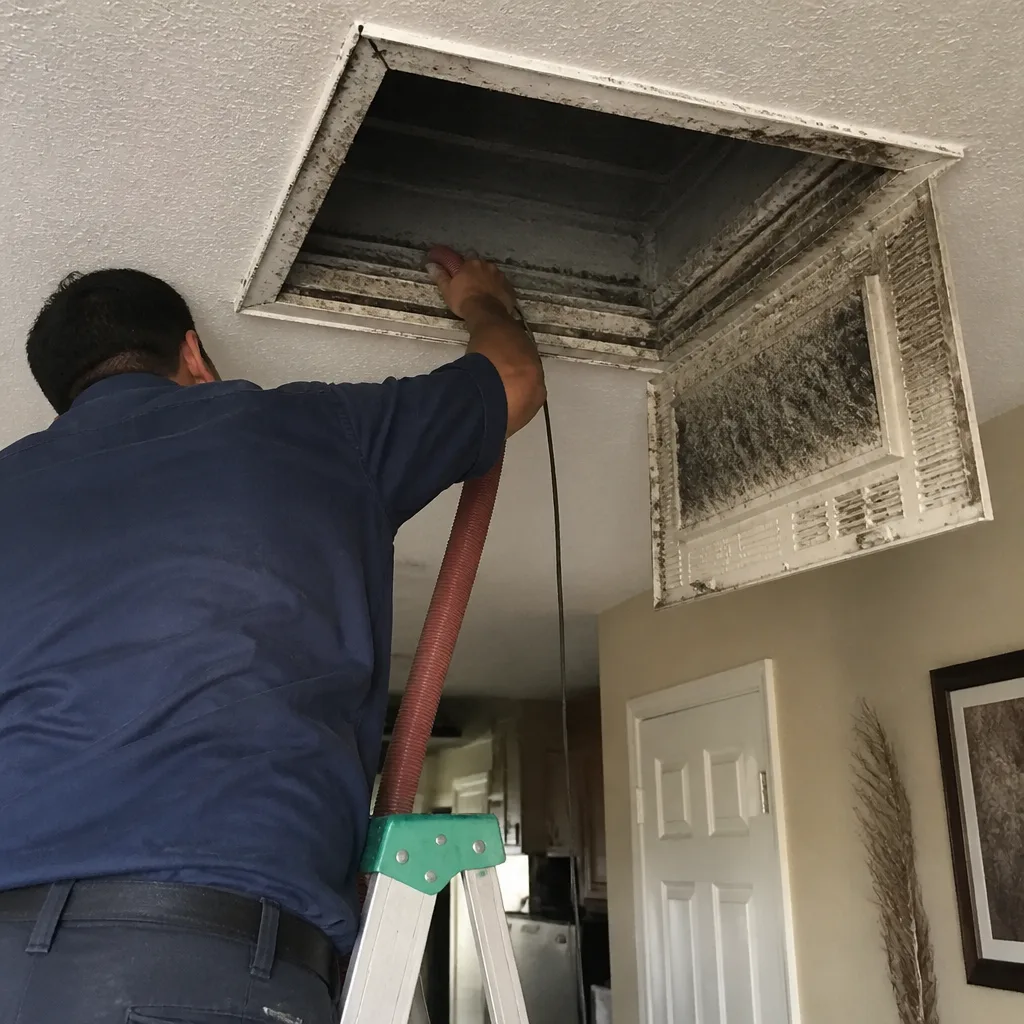
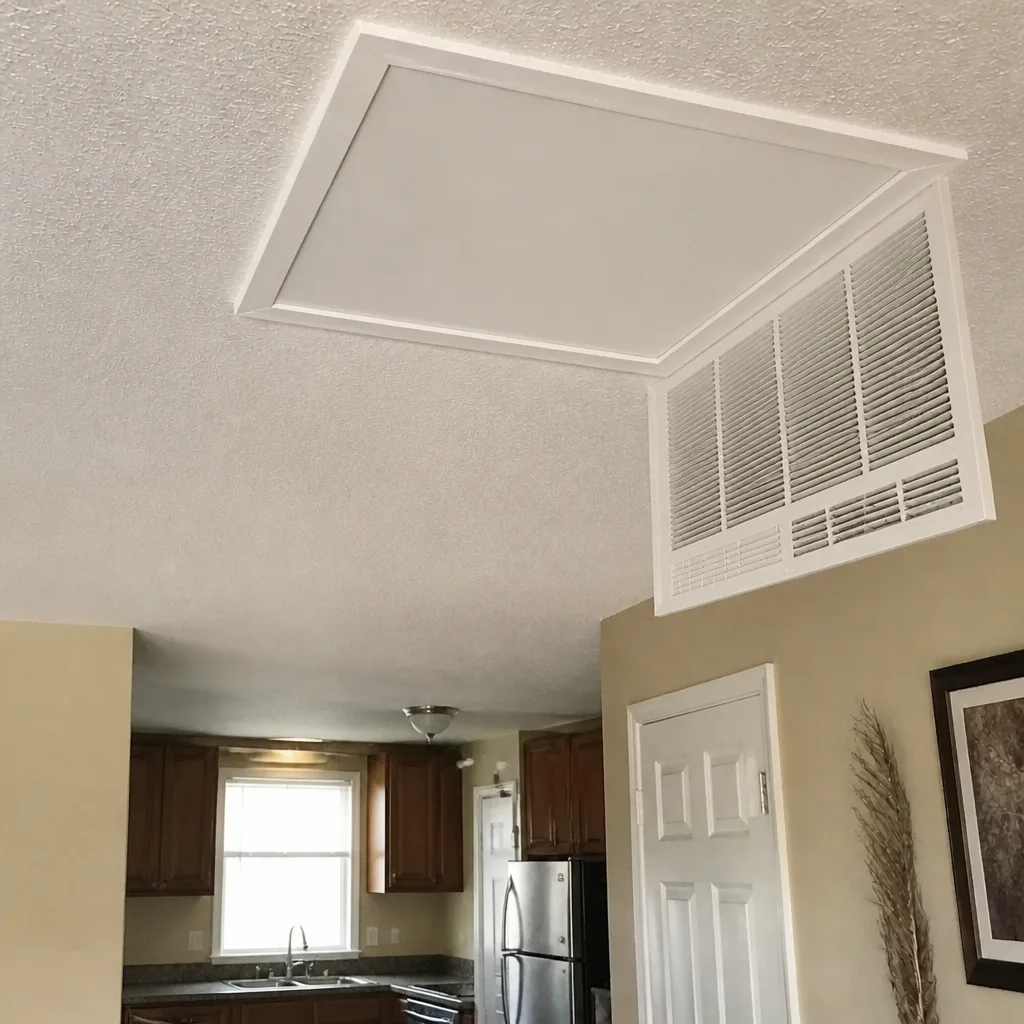
- Photos. Before-and-after photos of your own ducts are the clearest proof the work was done and the best visual record of what the system looked like.
Keep this in a folder with your HVAC records. When you book the next cleaning, share it. A technician who knows the history can work faster and give you a better read on whether the interval should shorten or stretch.
Air duct repair belongs in this log too. If the technician finds a compromised section and seals or patches it, that’s a repair that affects the whole system. We handle sealing, patching, and reconfiguration on the same visit as the cleaning, so you’re not left hunting for a second trade to close the job.
Signs It’s Time Before the Interval Says So
The schedule is a guide, not a rule. Your system will tell you when it’s ready, often before the interval runs out. Watch for these signs and treat them as a prompt to book an inspection.
- Visible dust on register covers or around supply vents. If dust is collecting at the source, it’s coming from inside the duct run.
- Musty or stale odors when the system starts. A smell that appears when the air handler kicks on points to material in the ducts or at the coil.
- Allergy symptoms that flare when the HVAC runs. Not a diagnosis, but a pattern worth noting. If symptoms track with system operation, the duct environment is worth checking.
- Visible debris inside a supply run. Pull a register cover, shine a flashlight, and look. A coating on the duct walls means the interval is up.
- A recent renovation. Even a small one. Drywall dust travels.
- Pest activity. Any sign of rodents or insects in the duct system.
- Uneven airflow between rooms. A blocked or disconnected run is an air duct repair issue, not just a cleaning issue.
When several of these stack up, stop waiting on the calendar and get the system looked at. The inspection itself is the answer. Some systems are fine and the signs are false alarms. Others are heavily loaded and need cleaning now. You can’t know without looking.
Common Mistakes to Avoid
- Treating the interval as a universal rule. The three-to-five-year average ignores pets, renovation dust, and run-time. Build your interval around your household, not a number you read online.
- Skipping the filter. A cheap filter left in too long is the most common reason ducts load up faster than they should. Match the filter to the system and change it when it loads.
- Grouping the dryer vent with the HVAC ducts. They’re separate systems with separate schedules. The dryer vent needs an annual inspection regardless of when the ducts were last cleaned.
- Cleaning without containment. A job that doesn’t use negative-air equipment can redistribute dust into the living space. Ask what equipment the technician uses before you book. Rotary brush systems paired with a HEPA vacuum and containment filtration are the standard we hold ourselves to.
- Ignoring baseline triggers. Move-in, post-renovation, and post-pest events reset the clock. Skipping a cleaning after a remodel means living with drywall dust in the system for years.
- Not keeping a log. Without a record, the next service call starts from zero. Date, debris type, filter condition, and repairs. Write them down.
- Assuming a visual scan of the supplies is enough. The returns and the air handler can hold more debris than the visible supply runs. A proper inspection covers the whole system.
See the difference
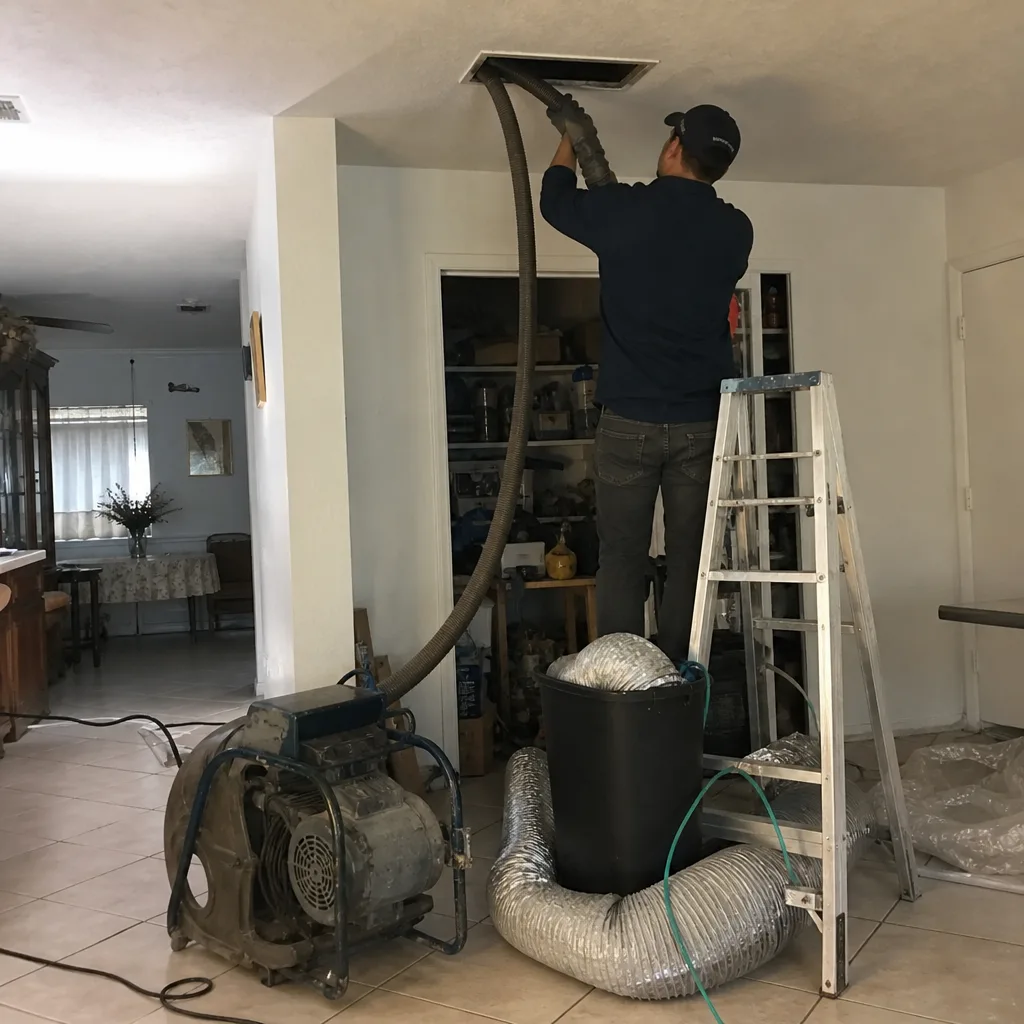 Before
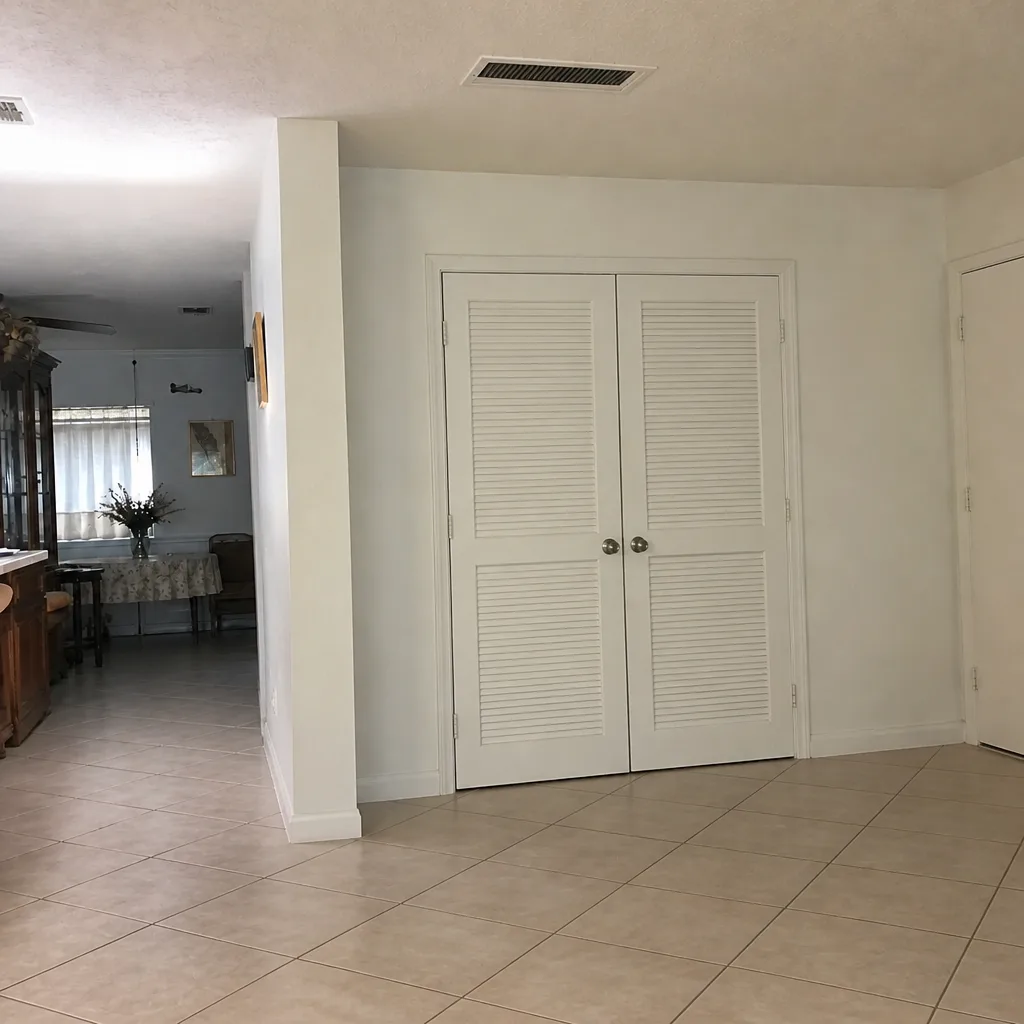 After
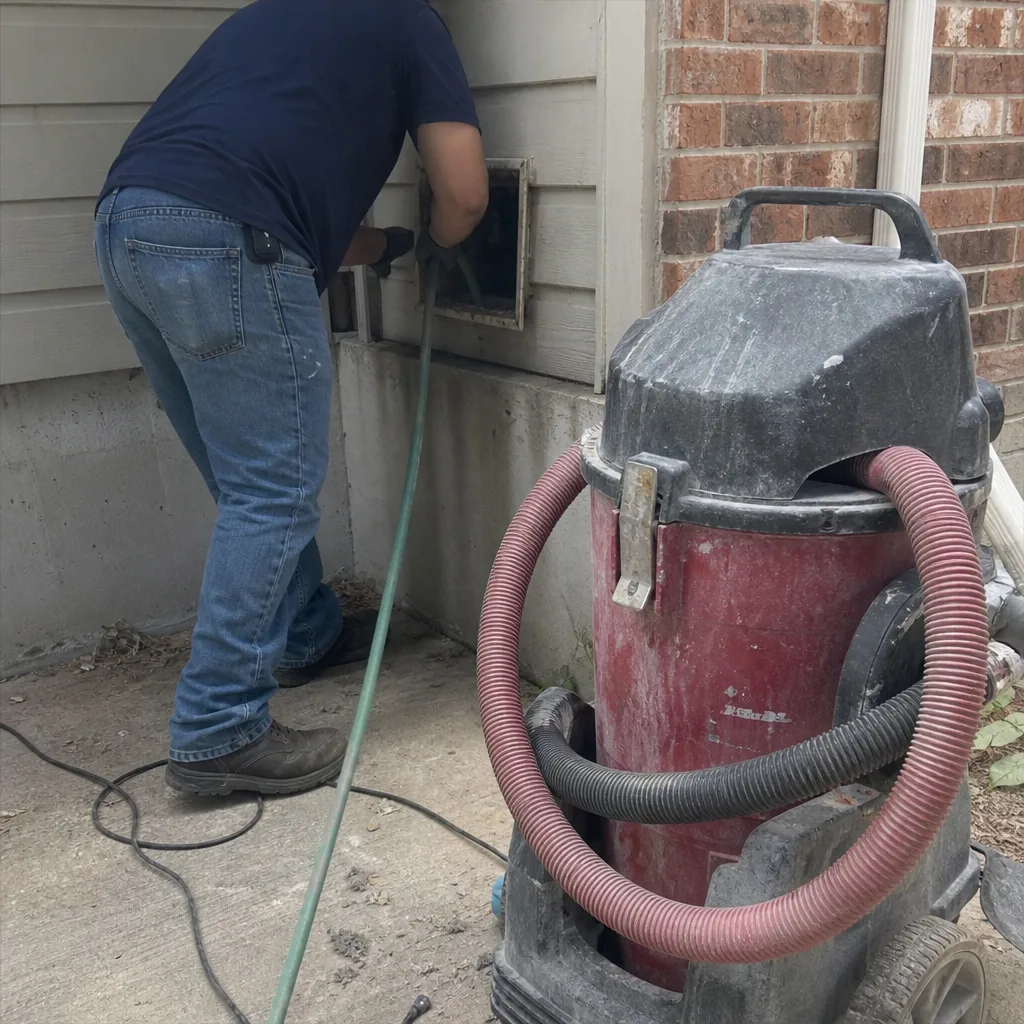 Before
 After
 Before
 After
When to Call a Professional
Some signs mean it’s time to stop scheduling and book a visit. If your ducts haven’t been cleaned in the past five years and you’re not sure of the last service date, a professional inspection will give you a real answer. If you’ve had a renovation, a rodent event, a water intrusion, or a recent HVAC fault, the cleaning is due now regardless of the calendar. Visible dust inside a supply run, musty odors on startup, or a dryer vent that hasn’t been inspected in over a year are all reasons to call. Duct Cleaning Midland offers free estimates in Midland. Call (844) 382-8255. We answer 24/7. Fast dispatch from 7am to 7pm, Sunday through Friday.
Frequently Asked Questions
Most Midland homes fall between every 2 and 5 years, depending on household conditions. Multiple pets, recent renovations, or a system that runs nearly year-round push the interval toward 2 to 3 years. A pet-free home with good filter habits and a shorter run season can stretch to 4 or 5. The calendar is a starting point; visual inspection and baseline triggers set the real date.
Yes. A system that runs ten months a year moves roughly two and a half times the air volume of one that runs four months, which means more particulate carried into the ducts and more settling. In Midland, that usually shortens the interval by a year or two compared to a milder climate.
It can extend the interval, but only if the filter is changed before it loads up and it’s correctly matched to your equipment. A filter that’s too restrictive for the system can reduce airflow. If you have a Honeywell or Aprilaire whole-home filtration system, use the filter specified for that equipment. The technician should clean around the filtration setup, not through it.
The price is set per job by the written estimate, which is why we quote in person rather than over the phone. A written estimate gives you a flat price for the whole system, agreed before work starts, with no per-vent pricing and before-and-after photos of your own ducts. Call (844) 382-8255 for an exact quote – estimates are free.
Cheap quotes usually reflect a smaller scope: a single tool, no containment, or a quick pass over the supplies without cleaning the returns and air handler. The low number on the coupon isn’t the number on the invoice once the technician arrives. Our jobs use a two-stage process with rotary brush equipment, a HEPA vacuum under negative pressure, and containment filtration so nothing is redistributed into the living space. The written estimate is the final price.
No. The dryer vent is a separate system with its own schedule. Lint accumulates based on how much laundry you do, not on HVAC run-time, and it’s a documented fire hazard. We recommend an annual inspection of the dryer vent regardless of when the ducts were last cleaned. Clothes taking longer to dry or a dryer that feels hot to the touch are reasons to stop using it and get the vent checked before the next load.
Ask for before-and-after photos of your own ducts, not stock images. The photos should show the interior of the runs before cleaning and after. A log of the service with debris description and any repairs performed gives you a record to compare against next time. Our technicians provide both.
The Bottom Line
Duct cleaning intervals should track household conditions, not the calendar. In Midland, the long cooling season and dusty outdoor air compress the timeline, so a home with pets, a recent renovation, or a system that runs nearly year-round is due sooner than the generic three-to-five-year guidance suggests. Build your interval around your household profile, reset the clock at baseline events, match your filter to the system, and keep the dryer vent on its own annual inspection track. Log the date, debris type, filter condition, and repairs after every cleaning. That record is what makes the next service call smarter than the last. Our technicians have up to 8 years of experience, and we’re happy to look at your system and give you a straight answer on where it stands.
Call (844) 382-8255 for a free estimate. We answer 24/7. Fast dispatch from 7am to 7pm, Sunday through Friday. One flat price per system, agreed before work starts, and before-and-after photos of your own ducts.
Written by the team at Duct Cleaning Midland.