
Last updated November 15, 2026
 Whole-home duct cleaning
 Dryer vent cleaning
 Camera inspection
 Sanitizing & deodorizing
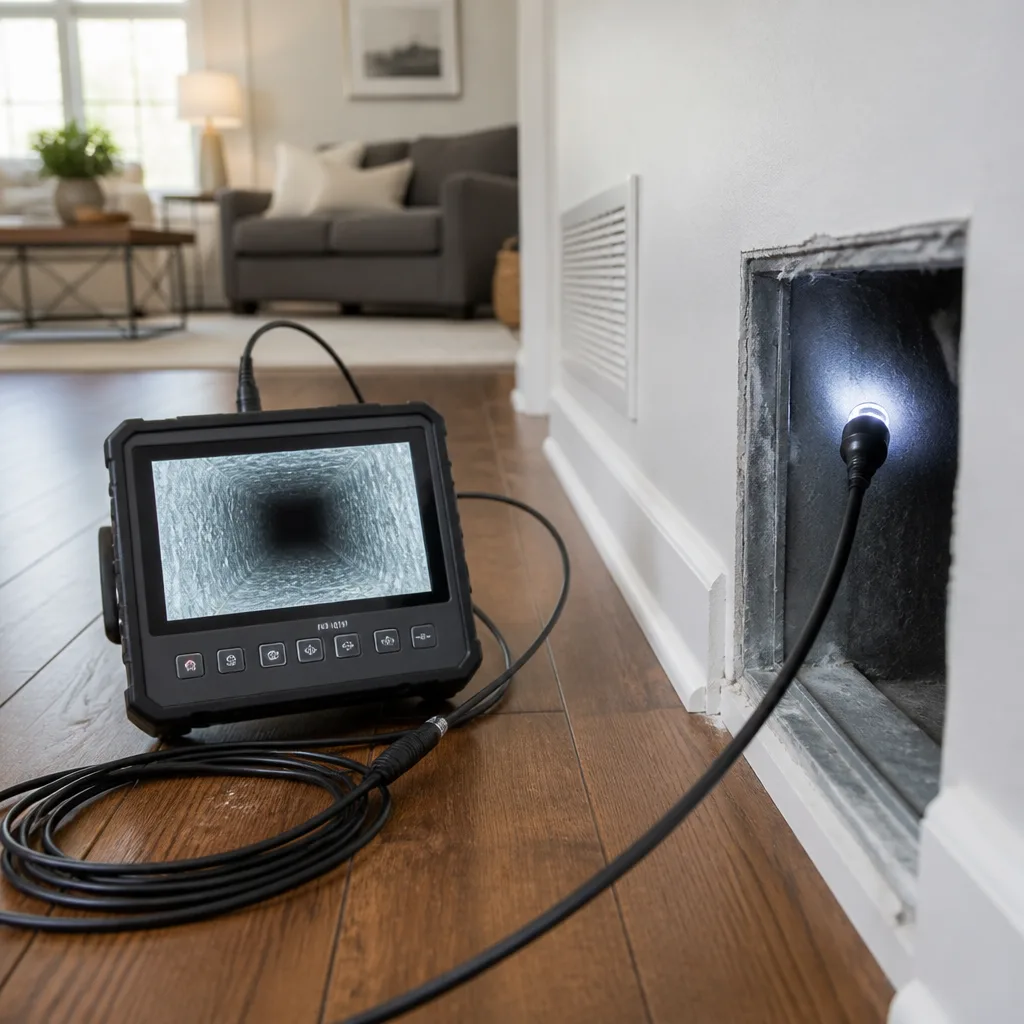
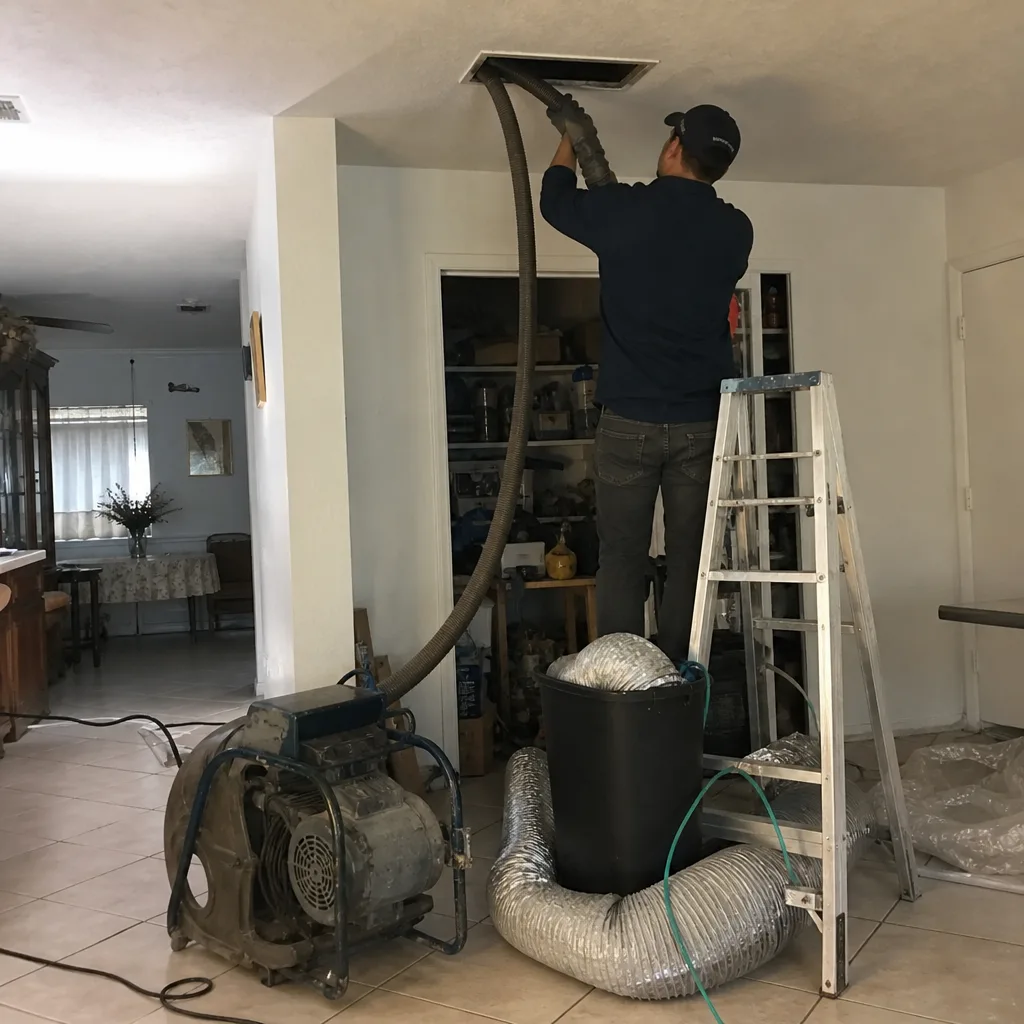
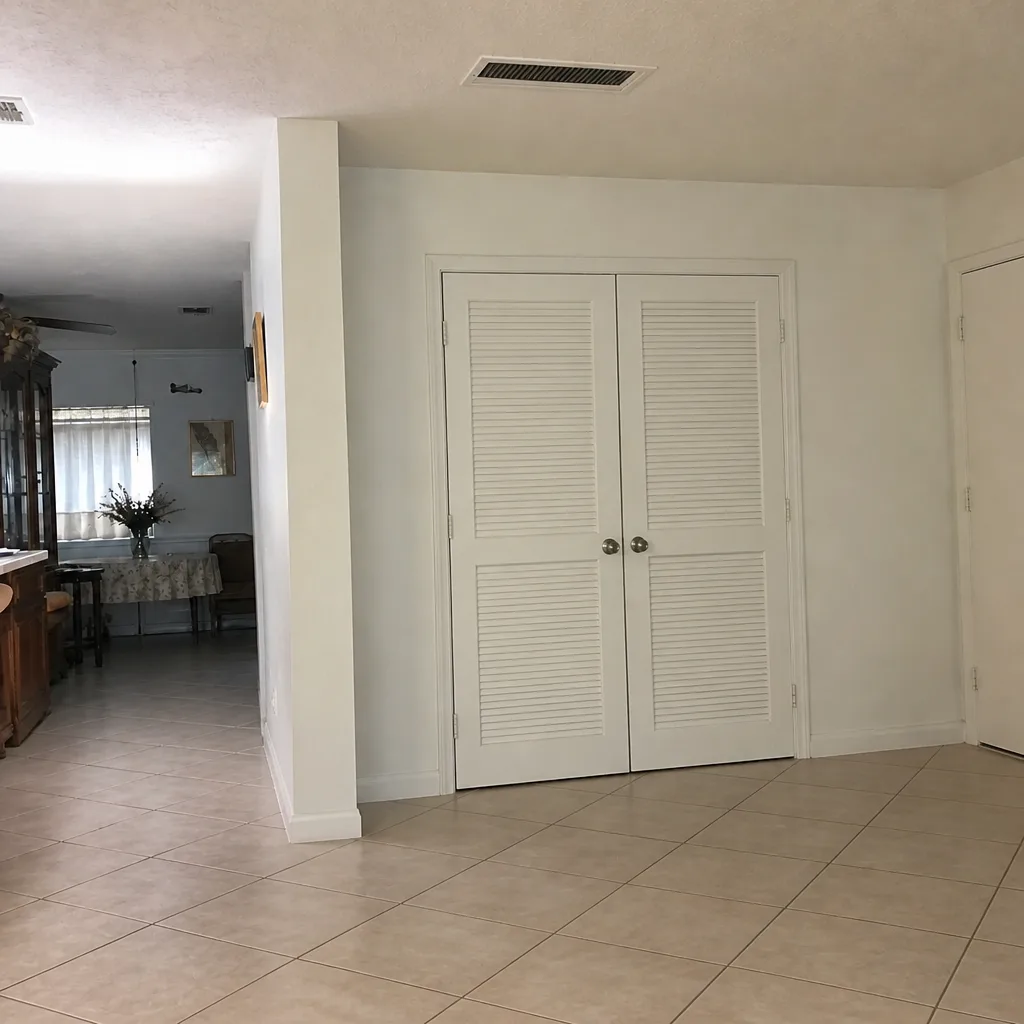
Whole-system duct and dryer vent check with before-and-after photos - you see exactly what came out of your vents
That "$99 whole-house special" is a bait ad - the real number appears once they are in your hallway, or the "clean" is a shop-vac at the register. We photograph the inside of your ducts before and after instead.
Air Duct Cleaning Maintenance Checklist for Midland Homeowners
A clogged return air filter doesn’t just reduce airflow. In Midland’s summer heat, it can push your system into short-cycling within 48 hours, and the debris that slips past a saturated filter goes straight into ductwork you won’t see for years. Most homeowners treat duct maintenance as a once-a-decade afterthought, which is exactly backwards. The work that protects your air quality happens in the small, repeated checks between professional cleanings. This guide gives you a task-by-task framework built around the failure points that actually show up in Midland homes: what to check monthly, quarterly, and annually, how to read the early-warning signs at your registers, and the point where a checklist item becomes a job for a pro.
Quick Answer
A practical air duct maintenance checklist for a Midland home breaks into three cycles: monthly filter checks and register inspections, quarterly duct-connection and flex-joint reviews, and an annual professional assessment. Your filter is the single most important item because it protects the whole system, and the biggest early-warning signals are visible dust streaks at supply registers, musty odors at returns, and loose or disconnected flex duct joints you can spot by hand. If you find torn ductwork, pest debris, or dust that returns within days of cleaning, that’s when it’s time to call a professional.
Styles & brands we work with
- Whole-home duct cleaning
- Dryer vent cleaning
- Camera inspection
- Sanitizing & deodorizing
Table of Contents
- Monthly Tasks: Filters and Registers
- Filter Selection for Midland’s Dust and Particulate Load
- Quarterly Tasks: Duct Connections and Flex Joints
- Reading the Signs at Your Supply and Return Registers
- Annual Tasks: The Full-System Review
- Seasonal Triggers: Dust Storm Season and Peak Cooling
- When a Checklist Item Becomes a Professional Job
- Common Mistakes to Avoid
Monthly Tasks: Filters and Registers
The monthly cycle is short, maybe ten minutes, but it’s where most duct problems are either caught early or allowed to grow. Your first job every month is the return air filter. Pull it, hold it up to a light, and judge how much light passes through. A filter that looks gray and matte from the front is usually far more loaded on the back side, so check both faces. In Midland’s dusty months, a “3-month” filter can load up in a few weeks; judge by condition, not the label.
Second, walk your registers with a flashlight. At each supply register, look for dark streaks fanning out from the grille onto the ceiling or wall, a halo of fine dust around the frame, and any visible debris clinging to the louvers. A light, even film is normal. Streaking and halos are not. Third, listen. With the system running, put a hand near each register and feel for weak output compared to the others. A single weak register points to a branch-duct problem; weak output everywhere points upstream, toward the filter, the blower, or a major trunk.
Monthly checklist:
- Remove the return filter and inspect both faces against a light source. Replace if you can’t see light through it.
- Wipe the register faces with a damp cloth so you can tell new dust from old on your next pass.
- Check each supply register for dark streaks, halos, or clinging debris.
- Feel airflow at every supply and note any that lag behind the rest.
- Sniff the returns. A musty or “dirty sock” smell means moisture or biological growth somewhere in the system and jumps to the top of your list.
- Note the date you checked. Patterns only become visible when you write them down.
If your monthly notes keep pointing to the same weak register or the same dusty room, it’s worth a closer look at your air duct cleaning needs before the problem spreads through the whole trunk line.
Filter Selection for Midland’s Dust and Particulate Load
Filter choice is the trade-off most homeowners get wrong in both directions. A thin, cheap fiberglass filter barely catches anything and lets fine particulates ride straight into your ductwork. A very high-MERV filter can strain a residential blower, raise static pressure, and cut airflow enough to cause short-cycling in Midland’s peak cooling season. The sweet spot for most Midland homes sits in the middle: enough filtration to catch the fine dust this climate throws at a system, without choking the air handler.
Here’s the practical guidance we give homeowners:
- MERV 8 to MERV 11 is the working range for most residential systems in Midland. It catches the bulk of dust, pollen, and larger particles without pushing static pressure too high.
- MERV 13 and up only makes sense if your system was designed for it. On an older air handler, a thick MERV 13 can starve airflow. If you want higher filtration, ask whether your blower and return sizing can support it.
- Filter depth matters as much as MERV. A 4-inch or 5-inch media filter holds far more dust before it loads than a 1-inch filter, so it lasts longer and protects airflow better. If you have a whole-home filtration setup on a Honeywell or Aprilaire cabinet, that deeper media is doing real work and deserves a proper replacement schedule.
- Replace on condition, not the calendar. In Midland, dust storm season can shorten a filter’s life dramatically. Check monthly and replace when loaded.
If you run a whole-home filtration system, the cleaning itself has to respect that equipment. We clean around your filtration setup, not through it, so the media cabinet and its seals stay intact and the system keeps performing the way it was built to. That’s the kind of care that Duct Cleaning Midland brings to a job where filtration and ductwork meet.
Quarterly Tasks: Duct Connections and Flex Joints
Most of the ductwork in a Midland home hides behind drywall, but the accessible parts, usually at the air handler, in the attic, and at the plenum where the trunk starts, tell you a lot. You don’t need special tools for this. You need a flashlight, your hands, and a willingness to look at the joints where sections of duct meet.
Here’s how a quarterly inspection goes:
- Turn the system off at the thermostat before you start.
- Locate the accessible duct runs: at the air handler, at the plenum, and anywhere flex duct connects to rigid trunk or a register boot.
- Run your hand along each joint and connection. Look for gaps, separated seams, sagging flex duct, or tape that’s peeling or dried out.
- Check flex duct for kinks, crushed sections, or runs that sag between supports. A crushed flex duct chokes airflow to everything downstream.
- Look for dust streaks radiating from a joint. A streak at a seam is air escaping under pressure, and escaping air means dust is being pulled in somewhere else.
- Check for pest evidence: droppings, nesting material, or gnawed duct insulation. Rodents find their way into attic ductwork and the damage they cause is a professional job.
- Restore power and confirm airflow at the registers nearest the joints you inspected.
Small gaps you can see are worth noting. Torn flex duct, disconnected joints, crushed runs, and pest damage are not DIY fixes; they’re air duct repair territory, and sealing or reconfiguring compromised ductwork on the same visit is part of the work. A small leak you catch quarterly is a cheap fix. A disconnected joint running for a full cooling season is a much bigger one.
Reading the Signs at Your Supply and Return Registers
Your registers are the only part of the duct system you see every day, and they’re a surprisingly honest gauge. The trick is knowing which patterns are normal dust accumulation and which ones point to a real problem. In Midland, some dust at the registers is simply the cost of living here. The question is whether what you’re seeing is even and light, or concentrated and directional.
Normal accumulation: a thin, even film of dust across the grille and a light dusting on the nearby surface, roughly the same at every register, building up slowly over weeks.
Warning signs:
- Dark streaks fanning from the grille onto the ceiling or wall. That pattern means dust-laden air is being pushed out around the edges, often because the register isn’t seated or the boot is leaking.
- A halo of fine dust around the frame that returns quickly after you wipe it. Fast-returning dust usually means the supply is blowing particles out rather than delivering clean air.
- Heavy dust at some registers but not others. Uneven loading points to a specific branch or a leak in that run.
- Black or gray staining rather than tan dust can signal soot, moisture, or biological growth, and it deserves a professional look.
- Visible debris clinging to the louvers (fuzz, fibers, insect fragments) means material is moving through the ductwork and landing at the outlet.
- Musty odor at the returns is a moisture signal, not a dust signal, and it’s the one smell we never tell a homeowner to wait on.
When you see these signs at more than one register, it’s less about wiping them down and more about what’s happening inside the ducts. That’s the point where a professional look is worth it, and we can tell you what we find.
Annual Tasks: The Full-System Review
Once a year, step back from the monthly and quarterly routine and look at the whole system. This is the cycle where you decide whether the year’s notes add up to a professional cleaning or whether your ducts are holding their own. In our experience, a home that’s been managed with a real checklist needs professional cleaning less often than one that’s been ignored, because small problems get handled before they compound.
The annual review:
- Review your 12 months of register notes. Are the same rooms dusty year after year? Is a weak register still weak? Patterns matter more than any single observation.
- Assess filter history. If you went through filter after filter during dust season, your ductwork may be carrying more particulate load than the filter can keep up with.
- Check the air handler area and blower compartment for dust buildup (with the system off). Heavy dust at the blower means it’s coming from somewhere upstream.
- Schedule a professional inspection if any of your monthly notes tilted toward warning signs, and get a written assessment rather than a phone quote.
- Confirm accessible connections are sealed and flex duct is supported, not sagging. Note anything that’s changed since last year.
- Set next year’s reminders. Put the monthly and quarterly dates on a calendar now so the checklist actually runs.
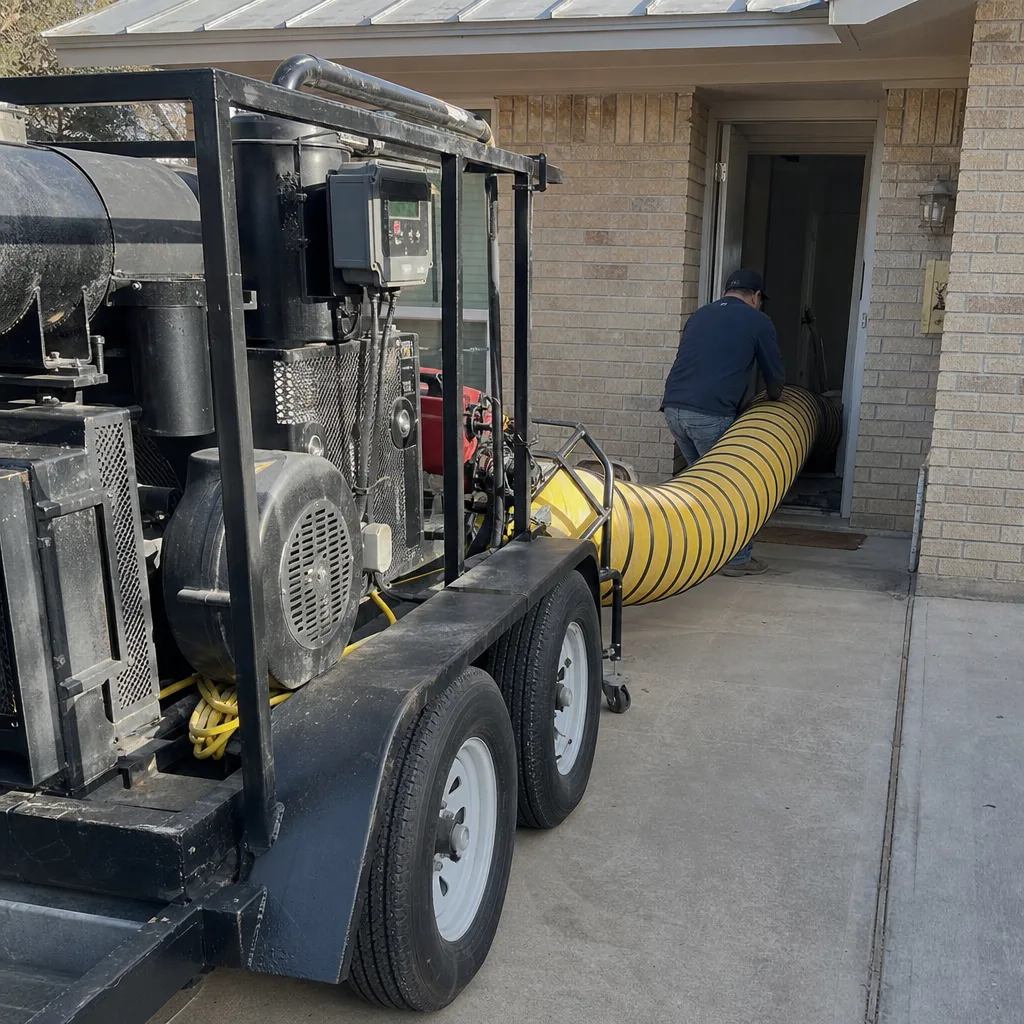
An annual professional review is also where equipment quality shows. When a cleaning is warranted, it should be done with tools that physically remove debris and capture it, not just blow it around. Rotary brush cleaning dislodges material from duct walls while negative-air HEPA equipment pulls it out of the system, and containment measures keep particulates in the work zone rather than in your living room.
Seasonal Triggers: Dust Storm Season and Peak Cooling
A checklist that ignores Midland’s calendar is only half a checklist. This climate has two reliability-important seasons for a home’s duct system: the dust storm window, when wind-driven particulate loads spike, and peak cooling, when the system runs hardest and any restriction in the ductwork has the biggest impact. Your routine should tighten around both.
Dust storm season: when the wind picks up and the sky turns, your filter is your first line of defense. Check it more often than monthly during this window, and expect to replace it more frequently. After a significant dust event, inspect the return grilles and the filter housing; if you see a heavy load, change the filter right away rather than waiting for the next scheduled check. Some homeowners close windows and run the system on a low, steady fan during dust events to keep the filter working, then inspect immediately after.
Peak cooling season: Midland’s summer heat means your system is running long shifts, and a clogged filter during this stretch can push a system into short-cycling or short-cycling-like behavior fast. This is when airflow restriction hurts most and when a weak register or a crushed flex duct costs you the most comfort and energy. Tighten your monthly checks during the hottest weeks: filter condition, register airflow, and any new streaks at the supplies.
The transition after each season: dust season and cooling season are the natural times to do your quarterly connection inspection and to schedule any professional work you’ve noted. Getting ahead of the next season is easier than reacting once it’s underway.
If your notes from either season keep pointing to a problem, the Midland homes we work on usually benefit from a professional assessment before the next peak, not after.
When a Checklist Item Becomes a Professional Job
DIY maintenance has a clear ceiling, and knowing where it sits saves homeowners from wasting effort on problems that need real equipment. Here are the specific thresholds where a checklist item stops being a chore and becomes a job for a trained technician.
- Dust returns within days of cleaning. If you wipe a register and the dust is back in a week, the source is inside the ductwork, not on the grille.
- Visibly torn, disconnected, or pest-damaged ductwork. Gaps and damage need sealing or reconfiguration, not tape from a hardware store.
- Persistent musty or “dirty sock” odors. Odor means moisture or growth somewhere you can’t reach with a cloth, and it should be assessed rather than masked.
- Uneven airflow that doesn’t improve after a fresh filter. A brand-new filter and one still-sputtering register says the restriction is downstream.
- Dust or debris blowing out of supplies after cleaning. Material coming out of a supply means it’s being pulled from a reservoir inside the system.
- A dryer that takes longer and longer to dry clothes, or a lint screen that fills fast. That’s a dryer vent signal, and it’s a fire-risk item that belongs on the professional list.
- Any burning or overheating smell near the air handler. Stop and call. That’s not a checklist item; that’s a safety concern.
When you cross one of these thresholds, the fix is a thorough cleaning and, where needed, repair done with real equipment. Rotobrush rotary brush systems scrub duct walls mechanically while Nikro negative-air equipment captures the debris, and we deploy Abatement Technologies filtration on every job to keep contaminants contained during the work. Our technicians have up to 8 years of experience, and the services stay in-house: cleaning, repair, and dryer vent work, not a subcontractor chain.
Common Mistakes to Avoid
- Judging a filter by the label instead of by inspection. A “3-month” filter can be fully loaded in weeks during Midland’s dust season. Check it with your own eyes and replace on condition.
- Chasing higher MERV without checking airflow. Over-filtering strains a residential blower and can cause short-cycling in peak cooling. Stick to the middle range unless your system is built for more.
- Wiping registers once and calling it maintenance. A clean grille tells you nothing about what’s behind it. The pattern of return and streak matters more than one finger-swipe.
- Taping over visible duct gaps as a permanent fix. Household tape fails in a hot attic. A leaking joint needs a proper seal, and a torn flex duct needs repair.
- Waiting for a smell to become a health concern. A musty odor at the returns is an early signal. Addressing it early is almost always simpler than letting it spread.
- Letting dryer lint accumulate without a vent check. A dryer vent is a documented fire risk, and lint buildup is the reason. It’s a safety item, not a comfort one.
- Buying the cheapest coupon cleaning. A low advertised price often turns into a bigger invoice once the technician is on site. Ask for one flat price per system, agreed before work starts, and before-and-after photos of your own ducts.
See the difference
 Before
 After
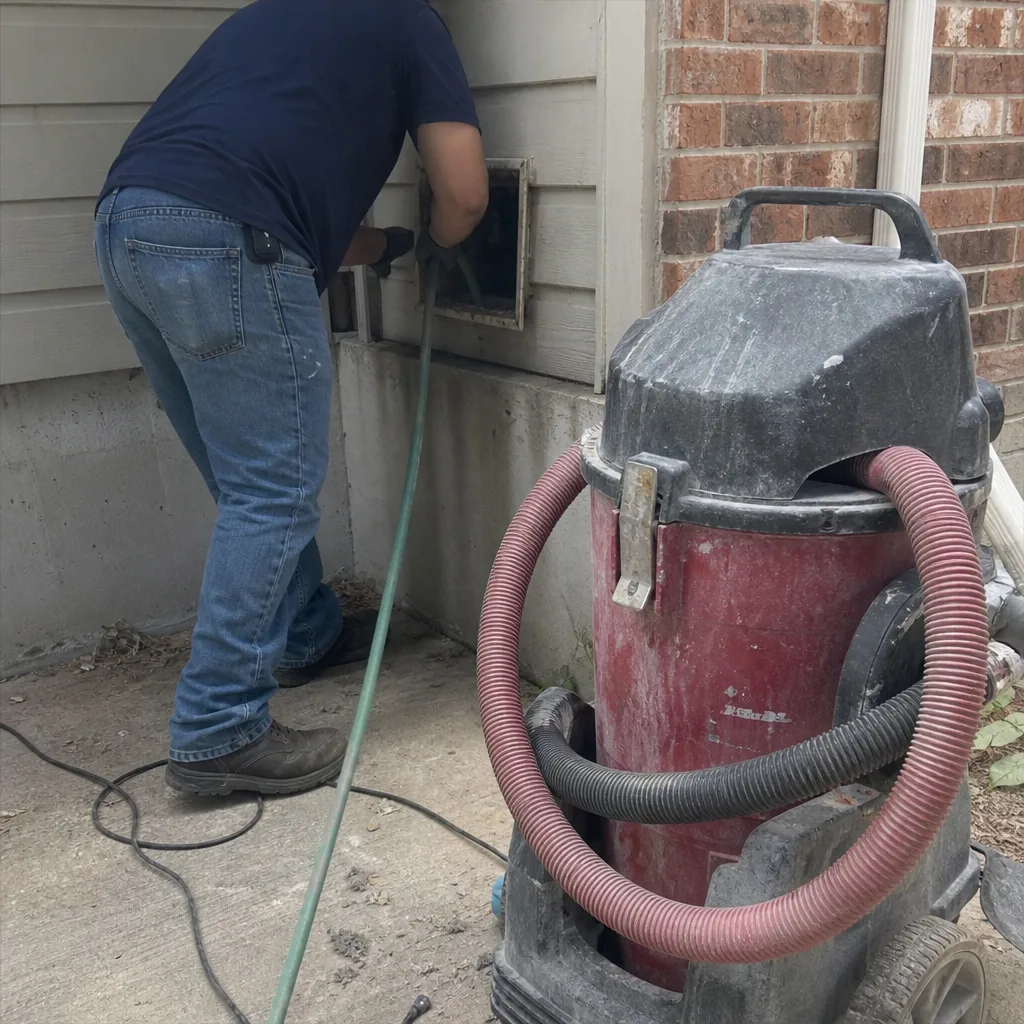 Before
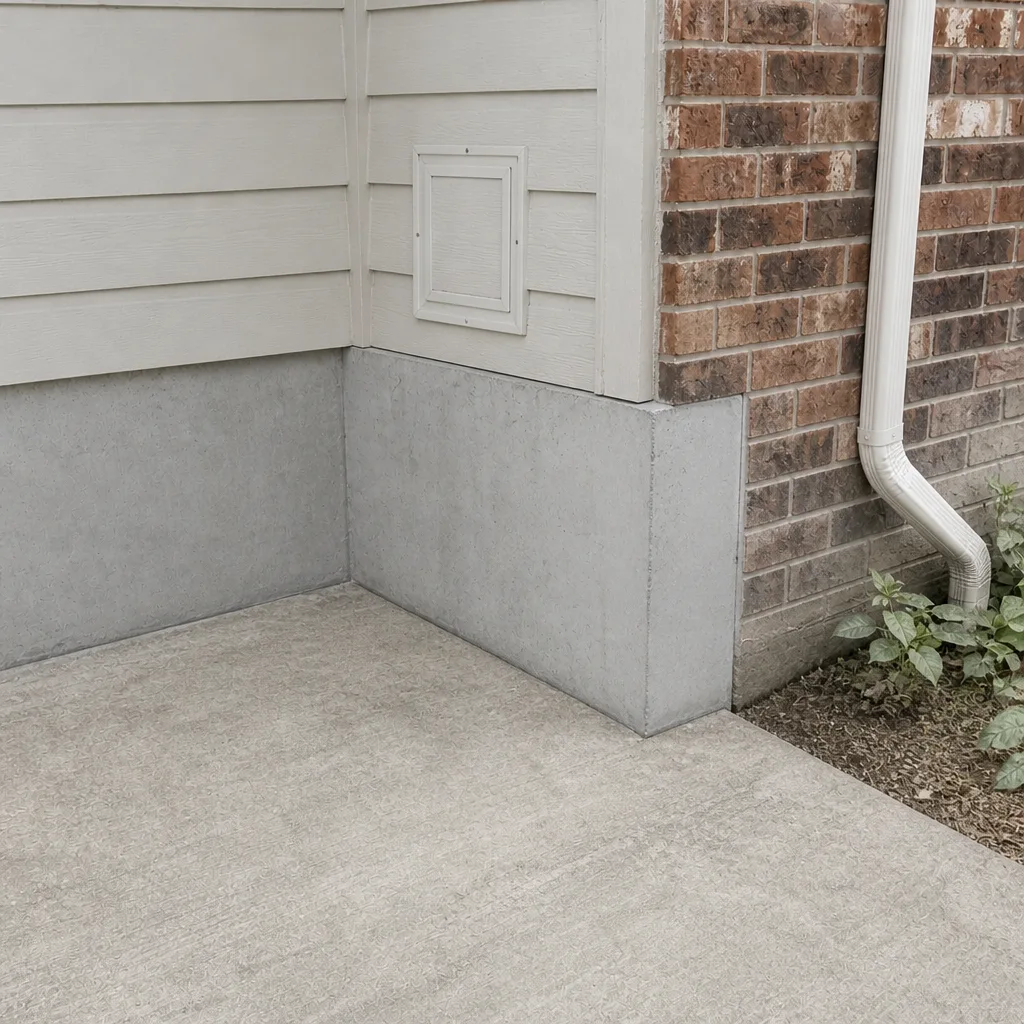 After
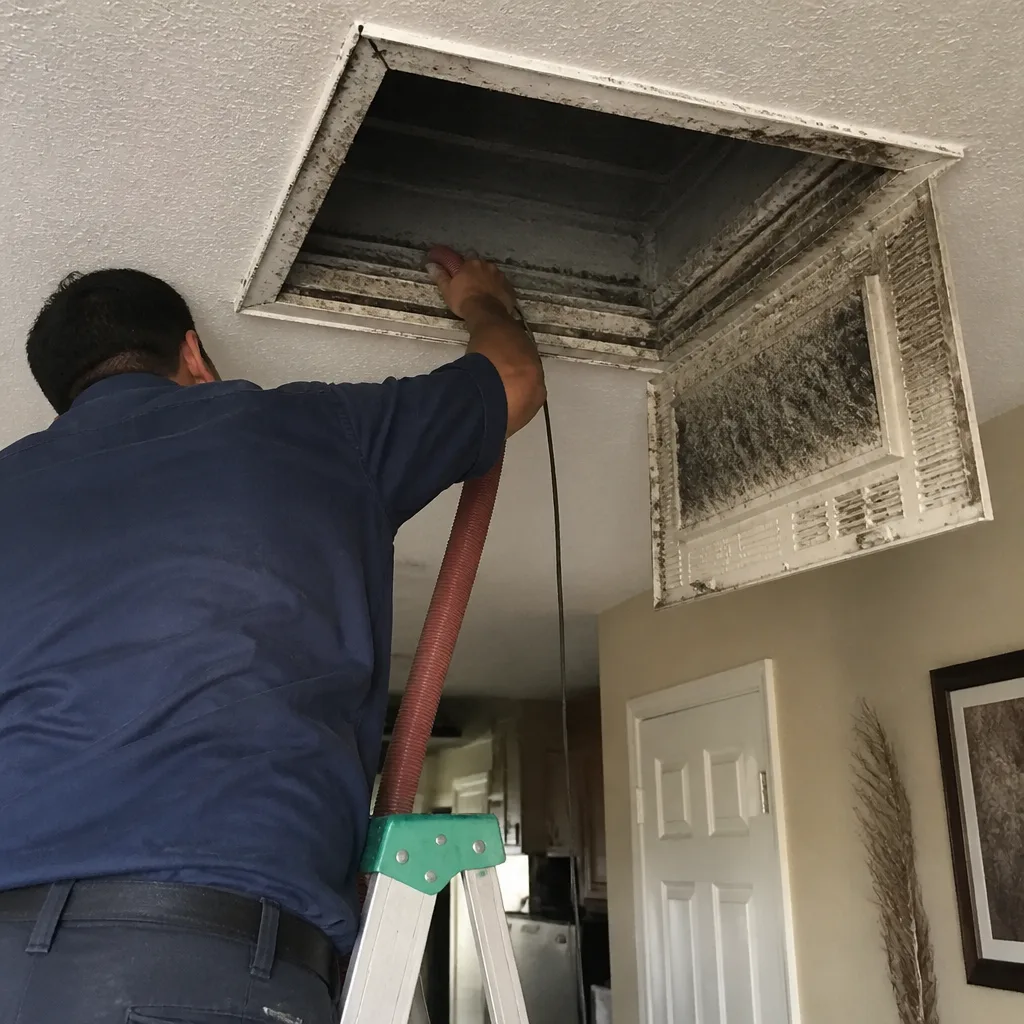 Before
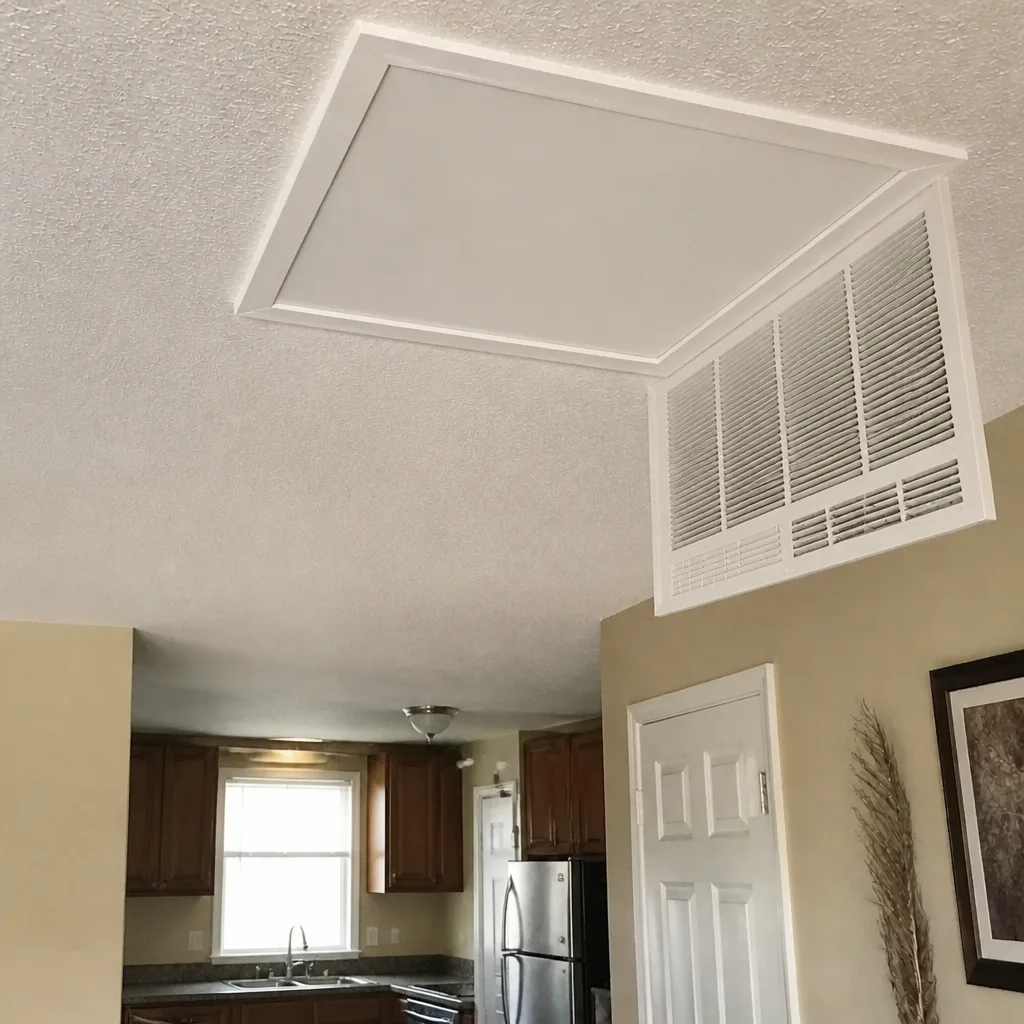 After
When to Call a Professional
Call a professional when your checklist points to a problem you can’t solve from the outside: dust that comes back in days, torn or disconnected ductwork, persistent odors, uneven airflow that survives a fresh filter, or a dryer vent that’s clearly loading up. Those are the signals that the work inside the system needs to happen, and it needs the right tools. Cleaning alone won’t fix compromised ductwork, and repair alone won’t clear a contaminated system, which is why we keep cleaning and repair under one roof. Duct Cleaning Midland offers free estimates in Midland. Call (844) 382-8255. We answer 24/7. Fast dispatch from 7am to 7pm, Sunday through Friday. And if dryer lint has been piling up, our dryer vent cleaning addresses the fire risk directly rather than just tidying the duct.
Frequently Asked Questions
Most Midland homes benefit from a professional cleaning every few years, or sooner if your monthly checklist keeps flagging dust that returns quickly, odors, or uneven airflow. A home with a well-managed filter routine can often go longer between cleanings, while a home that’s been through heavy dust seasons may need one earlier. Call (844) 382-8255 for an assessment and an exact quote, with estimates free.
MERV 8 to MERV 11 is the practical range for most Midland residential systems, catching fine dust without overloading the blower. Higher ratings can make sense only if the system is sized for them, so check with your HVAC tech before going to MERV 13 or above. The bigger win for most homes is a deeper media filter that holds more dust before it loads.
Yes, and the return air system is where it gets in most reliably. Fine particulate that slips past a loaded filter, plus any small gaps or unsealed joints, lets dust settle inside the ducts over time. That’s why filter discipline during dust season matters so much here: it’s the first line of defense for the ductwork you never see.
DIY maintenance reduces the frequency of professional cleaning but rarely eliminates it. Filters, register checks, and joint inspections catch the small problems and slow the buildup. What a checklist can’t do is physically remove settled debris from duct interior walls, and that’s the job for professional cleaning equipment like rotary brush and negative-air HEPA systems.
Ask for before-and-after photos of your own ducts, and make sure you’re getting a written estimate with one flat price per system agreed before work starts. A proper job uses mechanical cleaning and containment equipment, not just a shop vac at the register. Call (844) 382-8255 to get an exact quote; estimates are free.
It does, and it’s one of the most important recurring items. A dryer vent that’s loading up with lint is a documented fire risk, and a dryer that takes longer and longer to dry clothes is the visible warning. Dryer vent cleaning is a dedicated service with us, framed around safety and risk reduction rather than just airflow comfort.
The Bottom Line
Duct maintenance isn’t a once-a-decade event. It’s a short monthly filter check, a quarterly look at accessible joints and flex connections, and an annual review that turns a year of notes into a decision about professional cleaning. In Midland’s dust and heat, the filters and registers do most of the early-warning work, and the payoff is a system that runs like it should and ductwork that stays cleaner longer. Write your checks down, watch for streaks and returning dust, and call when the signs say the job is bigger than a cloth and a filter. One flat price per system, agreed before work starts, and before-and-after photos of your own ducts. That’s what a real duct job looks like, and we can tell you exactly what yours needs. Call (844) 382-8255. We answer 24/7. Fast dispatch from 7am to 7pm, Sunday through Friday.
Written by the team at Duct Cleaning Midland.